Legacy & Living Memory

Legacy & Living Memory
Legacy & Living Memory
What connects a tuberculosis patient's wagon to a pineal gland extract to a women's health clinic, and why any of it matters to the people left standing.
T
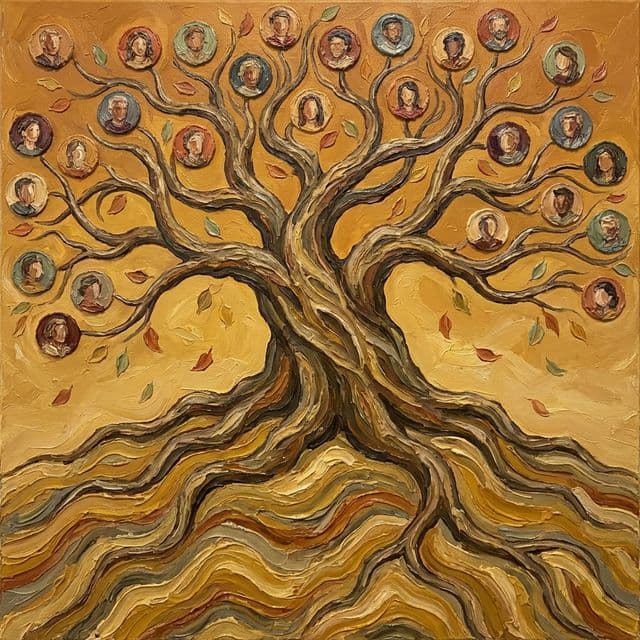
he temptation in family history is to manufacture a theme: "We were always doctors," or "We were always pioneers," or "Service runs in our blood." But the real pattern is messier and more interesting than that. William Nicholas Goodman was an English carpenter who converted to Mormonism and died of bad lungs in the desert. His grandson George became a pharmacist and the five-term mayor of Mesa. George's son Clifford built a hospital, died young, and left an eighteen-year-old to figure out the rest. That eighteen-year-old went to Hamburg, fell in love with the granddaughter of a Viennese gynecologist, and came home to build MomDoc.None of that was inevitable. All of it was shaped by specific decisions: to stay, to move, to marry, to practice in Chandler instead of Phoenix, to write down the bore of a well and the result of a school board vote and the cost of a hospital wing. This site tries to preserve those specifics, because they are what make family history different from mythology.
Threads
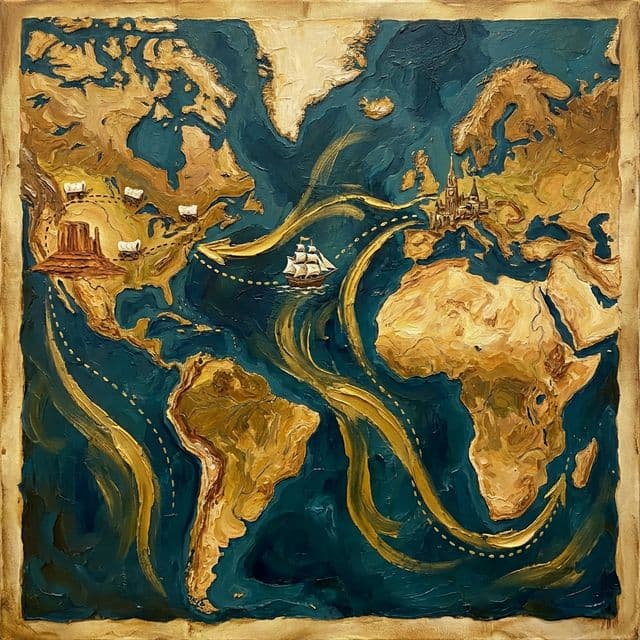
Three distinct threads run through this family, and they converge in the generation that built this archive.
The Medical Thread. It starts with Dr. William Erastus Platt in the 1890s, performing appendectomies with butcher knives and teaching his daughters to compound medicines. It runs through Clara Platt's pharmacy degree, through Clifford Sr.'s founding of Chandler Community Hospital, through Cliff Jr.'s MomDoc practice delivering seventy babies a month by 1990. On the Austrian side, it runs parallel: Robert Matthias Hofstätter was a gynecologist at the University of Vienna who developed a pineal gland extract therapy in the early twentieth century. Two medical traditions, an ocean apart, converging in a single marriage in Hamburg.
The Pioneer Thread. It starts with William Nicholas Goodman crossing the Atlantic from Caistor, England, and dying in Arizona Territory before his children grew up. It runs through George Edward driving freight teams into Bisbee, through the Ellsworth family raising a thousand ostriches in the Salt River Valley, through Edmund Lovell Ellsworth captaining the first handcart company of 280 pioneers across 1,300 miles. A century later, his great-great-grandson rode as Grand Marshal of a parade named after those birds.
The Transatlantic Thread. It starts with Peter Robert Adolf Maria Hofstätter, an Austrian social psychologist who spent several years in the United States in the early 1950s before returning to Germany, where he built a towering academic career at the University of Hamburg. His daughter Nadina grew up between continents, languages, and intellectual traditions. She was the one who made the permanent crossing: she married an Arizona physician in Hamburg in 1966, converted to his faith, was sealed in the Mesa Temple, and raised six children in a desert suburb fourteen time zones from Vienna. The transatlantic thread does not end with her immigration. It persists in every German Christmas tradition, every Austrian recipe, every bilingual bedtime story.
Extended Profiles
The essays below preserve complete draft narratives for each figure, with citations and source links. A privacy note: living family members are mentioned only at a high level.
William Nicholas Goodman: The Original Pioneer
MDX profile (verified via KindredPast, 2026-01-19).
Margaret Ann Taylor Goodman: The Widow's Store
MDX profile (from GEDCOM life sketch, 2026-02-24).
George Edward Goodman: Teamster, Freighter, Patriarch
MDX profile (from GEDCOM life sketch, 2026-02-24).
Roxanna Othelia Reed Goodman: The Gila Valley Mother
MDX profile (from Thelma G. Malloy life sketch, c. 1975).
The Ellsworth Family: Arizona Pioneers & Maternal Line
MDX profile (verified via family genealogy book, 2026-01-19).
George Nicholas Goodman: The Architect of the Valley
Essay draft (partially verified, 2026-01-18).
The Goodman Medical Dynasty (Clifford J. Goodman Sr.)
Essay draft (partially verified, 2026-01-18).
Clara Platt Goodman: The Matriarch of Mesa
Essay draft (partially verified, 2026-01-18).
Dr. Clifford James Goodman Jr.: Obituary & Professional Legacy
Essay draft (partially verified, 2026-01-18).
Peter R. Hofstätter: Austrian Psychologist Biography
Essay draft (partially verified, 2026-01-18).
Robert Matthias Hofstätter: Twilight of the Vienna Medical School
Report draft (partially verified, 2026-01-18).
The living archive
This archive began as a personal project: one grandchild, working from a box of journals, a stack of genealogy books, a folder of newspaper clippings, and the institutional memory of FamilySearch. It is built on facts when facts can be verified, and on carefully attributed family tradition when documentary proof is thin.
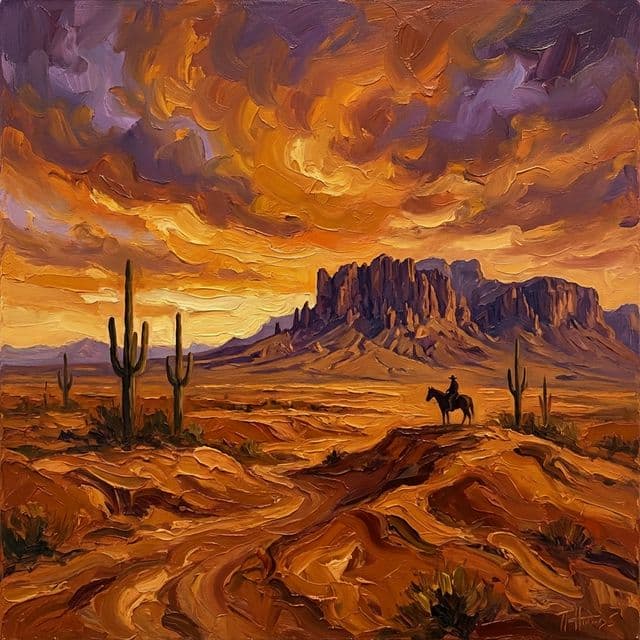
Every claim in these pages ties back to a cited source. Photographs carry taxonomy labels: (Historical Photograph), (AI-Generated Illustration, YYYY), (Family Archive Scan). Where the archive generates editorial art to illustrate scenes that precede photography, it says so in the caption. Where a portrait's attribution is uncertain, it says "putative." Where a date conflict appears in the sources, the archive notes the discrepancy rather than choosing sides.
The editorial voice aspires to the standard of narrative nonfiction: historically rigorous, narratively empathetic, and honest about what it does not know. The model is Jon Krakauer or Joan Didion, applied to a single family's archive rather than a national tragedy or cultural moment. The aim is to make these lives as vivid and contextualized on screen as they were in their own time.
What is missing
Any family archive is an incomplete record. This one is no exception.
The maternal voices are thin. Earlene Ellsworth Goodman raised eight children after her husband died at forty. The journals that survive are Dr. Goodman Jr.'s, written from his perspective. Earlene's own words, if she kept a diary, have not surfaced. Clara Platt Goodman's voice survives only in fragments quoted by others. The Hofstätter women, Nadina's mother and grandmother among them, are represented primarily through the men who wrote about them. The archive acknowledges this gap and works to address it where oral history, letters, or secondary accounts provide material.
Dozens of journals remain untranscribed. The archive currently draws from thirty chapters of Dr. Goodman Jr.'s journals, covering roughly 1984 to 1991. Earlier and later volumes exist but have not yet been digitized. Each new journal, when transcribed, will yield new stories, new facts, and new corrections to what this archive presently claims.
The Austrian records are still being discovered. Peter Hofstätter's published academic work is well-documented, but his personal correspondence, his family's pre-war records in Vienna, and the institutional archives of the University of Vienna's medical faculty have been only partially explored. Each new document found in those collections can reshape the Hofstätter side of this story.
This archive is alive. It changes as new sources surface, as living family members contribute corrections, and as the editorial team finds better evidence for claims that currently rest on tradition alone. The date stamp at the top of each chapter records when it was last updated. The source citations at the bottom of each story record where the evidence came from. Together, they form the architecture of a family history that is intended to last.