The Country Doctor
Dr. William Erastus Platt practiced frontier medicine with a butcher knife, a dining room table, and five Indian languages. His patients hung tea towels on the gate when they needed him.
In January 1969, the journal Arizona Medicine published a profile of a country doctor who had been dead for twenty-eight years. The article, written by Audrey D. Stevens, ran under the headline "Dr. William Erastus Platt" and carried the subtitle that the valley had already given him decades earlier: Healer of the West.
[S40]S40 — Journal ArticleAudrey D. Stevens, 'Dr. William Erastus Platt: Healer of the West,' Arizona Medicine, January 1969The making of a frontier physician
William Erastus Platt was born on October 30, 1858, in Fillmore, Utah. He earned his medical degree from the University of Louisville in 1893, then returned west to practice in St. Johns, Apache County, Arizona. For six years he ran a drug store there, learned five Indian tribal languages, and rode the countryside making house calls across distances that would have been a full day's journey for most people.
[S40]S40 — Journal ArticleAudrey D. Stevens, 'Dr. William Erastus Platt: Healer of the West,' Arizona Medicine, January 1969Around 1900 he moved to the Gila Valley, settling in Safford, where he received Arizona medical license number 41. He held a financial interest in the Apache Drug Company, the same pharmacy that his future son-in-law George Nicholas Goodman would make famous in Mesa.
[GED]GED — Genealogy DatabaseGEDCOM Master File: William Erastus PlattThe tea towel telegraph
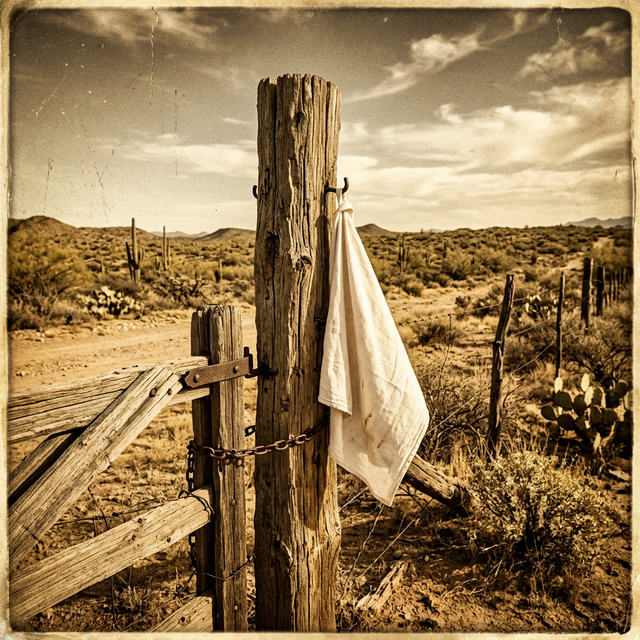
In an era before household telephones reached rural Arizona, Dr. Platt's patients developed their own communications system. When someone in the family fell sick, they hung a white tea towel on the wooden gate outside their property. Dr. Platt would spot these flags from his horse and buggy as he made his circuit across the valley, pulling up to isolated ranches to treat everything from catastrophic farm machinery accidents to sweeping infectious diseases.
[S40]S40 — Journal ArticleAudrey D. Stevens, 'Dr. William Erastus Platt: Healer of the West,' Arizona Medicine, January 1969Every room in the Platt house served double duty. The family dining room table was his operating table. Patients occupied the bedrooms. When a patient died, the body stayed in the house until burial, because Dr. Platt owned the one and only mortuary in Safford. His children learned early that home was also hospital, pharmacy, and funeral parlor.
[S40]S40 — Journal ArticleAudrey D. Stevens, 'Dr. William Erastus Platt: Healer of the West,' Arizona Medicine, January 1969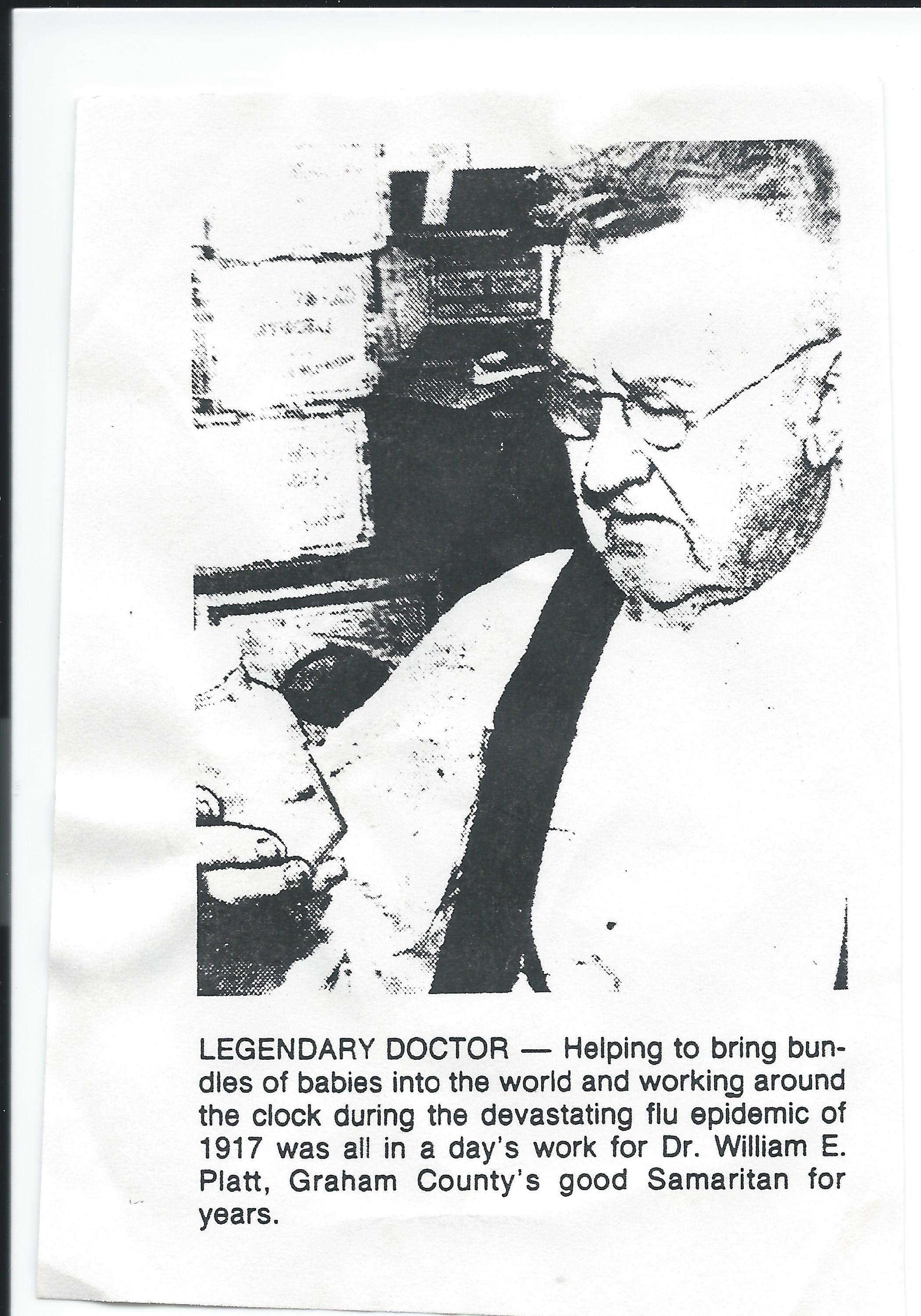
The butcher knife appendectomy
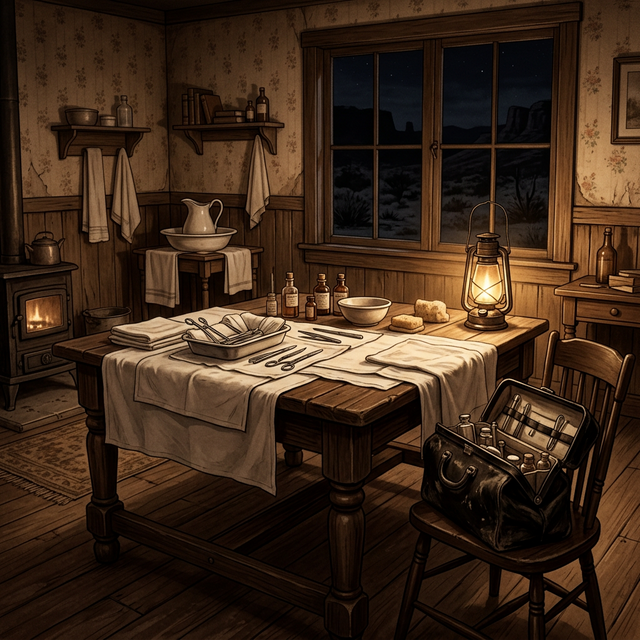
The Arizona Medicine article preserves one scene that reads more like frontier legend than medical history, except that it was published in a peer-reviewed journal and sourced from the doctor's own family.
When a patient presented with acute appendicitis and proper surgical instruments were not available, Dr. Platt performed an emergency appendectomy using a butcher knife and kitchen utensils. The dining room table served as his operating surface. The article does not record the patient's name or the exact date, only that the patient survived. In the Gila Valley of the 1890s, the alternative to improvisation was death.
[S40]S40 — Journal ArticleAudrey D. Stevens, 'Dr. William Erastus Platt: Healer of the West,' Arizona Medicine, January 1969Two hundred tonsillectomies in two days
Dr. Platt's wife, Isabelle Hill Romney, died on June 8, 1919, at age fifty-six, after a sudden illness lasting only a few days. She was born March 3, 1863, in Salt Lake City, a granddaughter of Miles Park Romney. Eleven children were born to them; five died young, six survived. The surviving children included Clara Platt, who would marry George Nicholas Goodman and co-found the Apache Drug pharmacy in Mesa.
[S46]S46 — News ArticleIsabelle Hill Romney Platt Obituary, Graham Guardian (Safford), June 13, 1919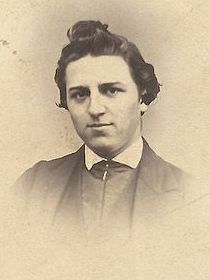
After Isabelle's death, Dr. Platt threw himself deeper into his work. The article preserves one extraordinary episode: he organized a mass tonsillectomy for the school children of the valley. With the assistance of his three eldest daughters and a Dr. T.H. Slaughter of Miami, Arizona, surgery began at six o'clock in the morning and continued until late at night, two days running.
By the end of the second day, more than two hundred school children were minus their tonsils.
[S40]S40 — Journal ArticleAudrey D. Stevens, 'Dr. William Erastus Platt: Healer of the West,' Arizona Medicine, January 1969The logistics alone are staggering. Each child required individual anesthesia, the procedure itself, recovery monitoring, and discharge. Two hundred procedures in roughly thirty hours of operating time means one tonsillectomy every nine minutes, sustained across two full days. The three daughters, trained by years of assisting their father, served as surgical nurses, anesthetists, and recovery ward attendants simultaneously.
The pharmacist daughters
Dr. Platt's influence extended beyond his own practice. Two of his daughters became registered pharmacists, learning the trade in his drug stores before pursuing formal credentials. Three of his grandsons became physicians. The medical dynasty that the Goodman family is known for traces its origins to this man, his dining room table, and the tea towels on the gates of the Gila Valley.
[S40]S40 — Journal ArticleAudrey D. Stevens, 'Dr. William Erastus Platt: Healer of the West,' Arizona Medicine, January 1969Clara Platt Goodman, his daughter, grew up watching her father meticulously measure and compound raw ingredients into medicines using brass scales and glass mortars. She would carry that knowledge to Los Angeles, earn her own pharmacy degree, and return to Arizona to co-found Goodman's Pharmacy with her husband. The through-line from Dr. Platt's frontier practice to the Goodman Medical Dynasty runs straight through Clara's childhood apprenticeship in those back rooms.
The last years
Dr. Platt practiced medicine in the Gila Valley for over forty years. In 1939, and again in 1941, testimonial dinners were held in his honor, covered by the Arizona Daily Star. He died in 1941 at the age of eighty-two.
[S40]S40 — Journal ArticleAudrey D. Stevens, 'Dr. William Erastus Platt: Healer of the West,' Arizona Medicine, January 1969The Arizona Medicine profile, published twenty-eight years after his death, concludes with a catalog of his professional life that doubles as a portrait of frontier Arizona itself: a man who learned five languages to treat his patients, who rode a horse and buggy because there were no roads, who operated with kitchen implements because there was no hospital, and who taught his daughters to compound drugs because there was no one else.
Cast of Characters
Sources
- [S40]↑
- [GED]↑GEDCOM Master File: William Erastus PlattGenealogy Database
- [S46]↑
Context for this story
Read more in Chapter 3 →Comments
Loading comments...