Herta Ingeborg Nadina Hofstätter Goodman
Daughter of Peter R. Hofstätter. Married Clifford J. Goodman Jr. in Hamburg, 1966. Raised six children on Bullmoose Drive.
Focus
Vienna: Daughter of Peter R. Hofstätter
Hamburg, 1966: Married Dr. Clifford Goodman Jr.
1986: The Bullmoose Drive homestead
Six children, two hemispheres, one family
The bridge between two worlds
Herta Ingeborg Nadina Hofstätter was born in 1947 in Austria and spent her early childhood in the fractured landscape of post-war Vienna, a city divided by Allied occupation and haunted by the ghosts of Empire. Her father, Peter R. Hofstätter, was a psychologist whose pioneering work on group dynamics and public opinion polling would make him one of Europe's most recognized academic figures in the long shadow of the Second World War. That upbringing gave Nadina early exposure to the academic world, as her father rebuilt his career and ultimately modernized German psychology.
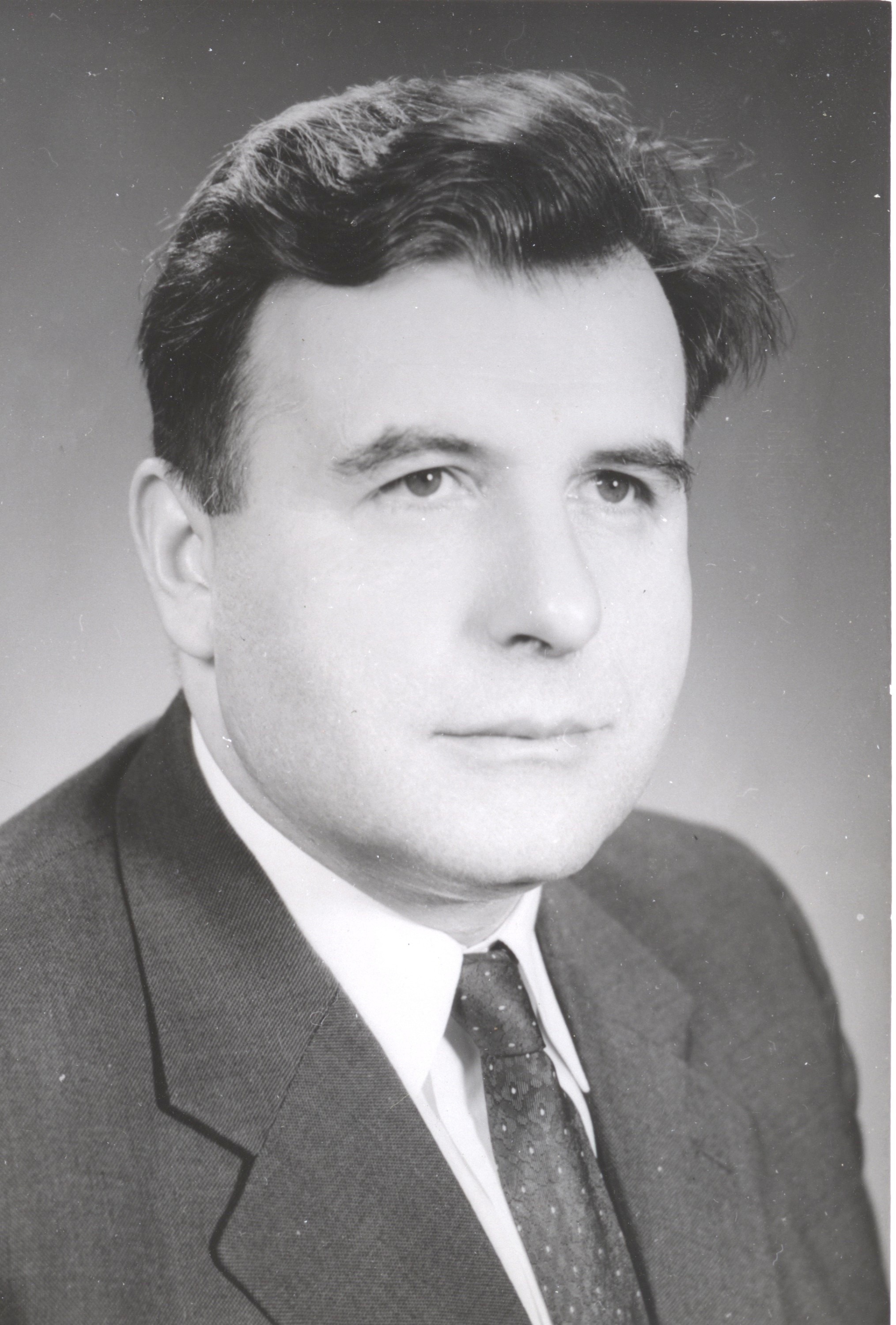
She would grow up primarily in Hamburg, where her father eventually held the Chair of Psychology. Her youth was marked by transatlantic movement, teaching her out of necessity how to hold two distinct worlds (and languages) together at once.
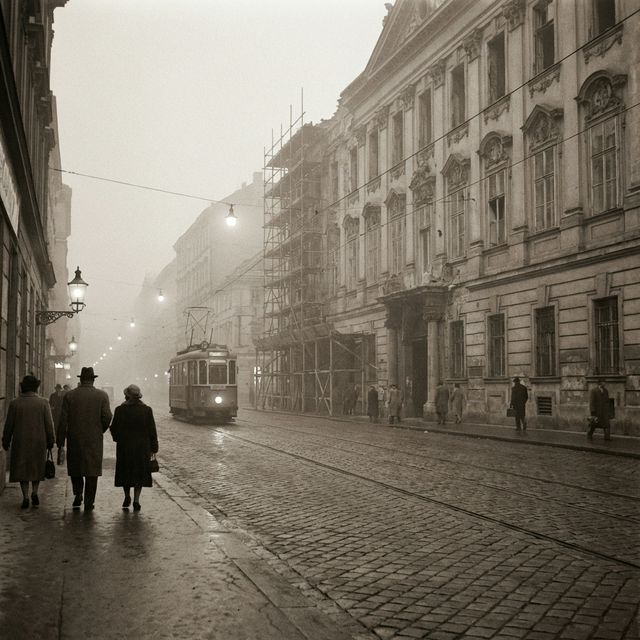
The Washington D.C. coincidence
Before settling in Hamburg, Nadina lived in the United States. In 1949, her father emigrated to America to teach at MIT and the Catholic University of America, moving the family to Washington, D.C.
By an extraordinary stroke of geographic coincidence, her future husband was living in the exact same city. Clifford Goodman Jr. had been born in Washington, D.C. in 1943 while his father attended medical school at George Washington University. For a brief window between 1949 and 1951, when the Goodmans finally returned to Arizona, the boy from the desert and the girl from Vienna were children living just miles apart in the American capital. Yet they would have to travel thousands of miles and wait over a decade to actually meet.
Hamburg, 1966
The two worlds finally converged where Nadina spent her teenage years: Hamburg. Clifford, now a young American serving a full-time LDS mission in Germany, met her there in the early 1960s. He was fluent in German by that point; she was navigating the same profound questions of faith and belonging that had drawn him across the Atlantic.
They married in August 1966.
[S35]S35 — Family NarrativeFamily narrative draft: Dr. Clifford J. Goodman Jr. (2026-01-18)The marriage was a genuine bridge: between Austria and Arizona, between a European intellectual tradition and a frontier Mormon family with roots in St. David and Mesa. Between her father's world of Vienna lecture halls and her father-in-law's world of Chandler medicine.
The Center of Gravity
Nadina was undeniably the gravitational center of the household. Like many women of her era, managing the domestic front while a husband built a medical practice, she rarely traded in loud public opinions, but behind the scenes, she was slyly decisive. "Mom was an active mom," her son Matthias recalled. She drove the children everywhere in an era before ubiquitous carpools, organized for Cub Scouts, and even set up Relief Society homemaking events for the local LDS ward long before she was officially a baptized member. She steered the massive logistical ship of a six-child family with quiet, unrelenting tenacity.
Her mornings began with a specific, unglamorous ritual: her young children making her coffee. Matthias remembered preparing "that nasty instant Nescafé" from a heavy glass jar with a recognizable red plastic lid, adding boiling water to the bitter powder. It was the high-octane fuel required for the relentless pace of a mother managing everything from school drop-offs to community events before the dawn of the stylized coffee shop era.
Joining the Church (1989)
Nadina officially joined The Church of Jesus Christ of Latter-day Saints in 1989. It was a decision that connected her not only to Clifford's faith but to the broader Goodman family's sense of heritage and continuity. Her sister Nori followed years later, joining the Church in Germany through a conversion that Nadina and Clifford were directly involved in facilitating.
Bullmoose Drive
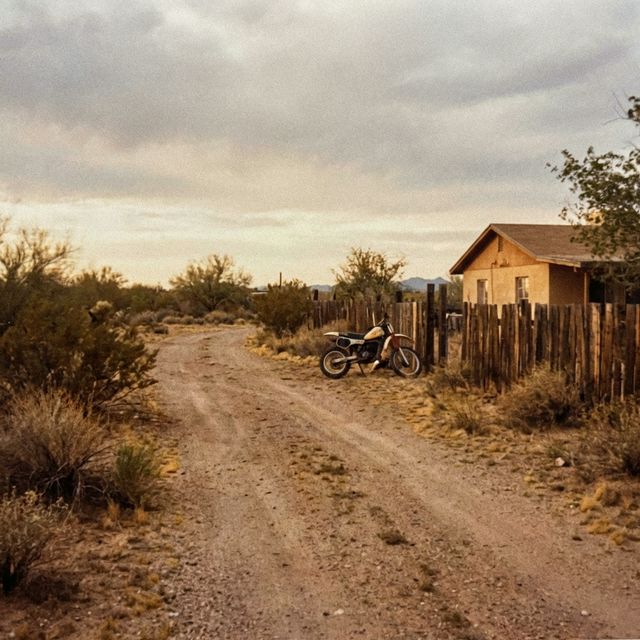
In 1986, the family established their home on Bullmoose Drive in Chandler, Arizona. It was a semi-rural property with room for six children, a garden, and the particular organized chaos of a large family with two parents working at full stretch. Clifford was building MomDoc; Nadina was running the household that made that possible.
This property was a wonderland of internal combustion and livestock, an era defined by high-octane childhood freedom. At one point, the family kept up to four horses. The kids rode dirt bikes, a Honda XR100 and a little 50cc, and tore around the property in a go-kart. The freedom came with hazards: Matthias recalls a vivid memory of his friend Peter Van Allen crashing the motorcycle into the go-kart and burning the back of his leg. This was the raw, unstructured childhood of 1980s Arizona, overseen by a mother who somehow kept the chaos contained.
Across the journals Clifford kept during the late 1980s and early 1990s, Nadina's influence is constant. She didn't seek the spotlight, but she acted as the family's essential navigator: steering, adjusting, and occasionally correcting course. In the account of Binki's mission farewell, it was Nadina who listened to Clifford's prepared talk and told him it "needed a story or a faith-promoting experience." She was right. He scrapped the talk and delivered something far better.
[S35]S35 — Family NarrativeFamily narrative draft: Dr. Clifford J. Goodman Jr. (2026-01-18)The Hofstätter heritage she carried forward
Nadina was the living link to a European lineage that would otherwise have been invisible to her American-born children. Through her, the family's roots ran back through Vienna to the Austrian academic world, and further back through generations of Central European history that the Goodman side of the tree could never have accessed on its own.
Her grandfather Dr. Robert Matthias Hofstätter, who practiced in Vienna, represented the same inheritance from a different angle: the twilight of the great Viennese medical and intellectual tradition, carried forward with dignity into the late twentieth century.
For her American-born children, Nadina was the definitive tie. She was the last to know Peter R. Hofstätter as a living presence, the last to remember the household that shaped her, and the last bridge to the Europe her father watched be destroyed and rebuilt.
A note on this profile
Nadina is living and has not reviewed or approved the contents of this page. It is written in gratitude and with the intention of honoring her place in the family's story, not to define or contain it. If you have corrections, additions, or photographs you would like included, please reach out through the About page.
Stories Featuring Herta Ingeborg Nadina Hofstätter Goodman
The Great 1989 Van Saga
1988–1989 • Story #5The 1988 San Francisco Expedition
1984–1987 • Story #6The 1985 Disneyland Lock-Out
1984–1987 • Story #7"Chinese Burritos" & the Camp Snoopy Magic Show
1984–1987 • Story #8The Era of Elaborate School Projects
1984–1987 • Story #9Nicky's Rolling Racer Mishap
1991 • Story #11Standing on the Shoulders of Giants
1988–1989 • Story #13Dina's Baptism
1989–1990 • Story #18The Temple Sealing
1982–2000 • Story #19The Lead Pouring
Sources
- [GED]↑GEDCOM Master File: William Erastus PlattGenealogy Database
- [S35]↑Family narrative draft: Dr. Clifford J. Goodman Jr. (2026-01-18)Family Narrative
Comments
Loading comments...