Air Raid Drills & the Kindergarten Mat-Wetters
Cold War duck-and-cover drills, a multi-color pencil that took weeks of saving, and the daily ritual of pretending not to peek during nap time.
Dad attended Kindergarten and early grades at Stoddart School in Washington, D.C. The school had the stately look of old Washington: "built of red brick, with white columns in a pseudo-colonial facade". Inside, the rooms had "high ceilings, and transoms above the doors" and the floors were "highly polished hardwood, and creaked a lot".
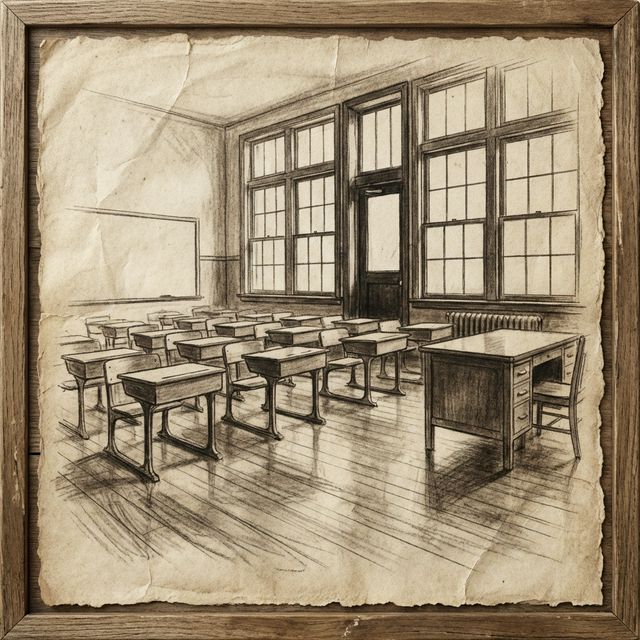
Life in a Cold War-era D.C. elementary school came with a surreal extra: regular air raid drills. "Among other powerful impressions from those years is a clear recollection of the frequent air raid drills and many civil defense films that we had in school," Dad recalled. "These were, at least partially, the product of the hysteria that followed the dreadful news that the Soviets also had nuclear weapons".
The drills had a strangely fun quality to them. "It was really kind of fun to be herded en masse into an interior hall in the school building and made to get down on the floor in a kind of knee-chest position with our hands over the backs of our necks," he remembered. The conversations on the floor had a philosophical edge unusual for elementary schoolers: "We were then left to wonder if the Russians were finally coming this time and to whisper about whether you would even have time to see the bright flash before you died". Dad noted their composure: "Our deliberations were all academic and theoretical, and I cannot recall ever being even the least bit worried, let alone even a little panicked or terrorized, by those thoughts".
Beyond the drills, daily life at Stoddart carried its own routines and treasures. "We had Graham crackers and milk daily (for which one had to bring a nickel, or maybe it was a penny, every week)," he wrote, "always followed by a nap (Kindergarten was all day then) on little straw mats on the cold wooden floor".
The nap came with a daily social contract. "Every day at the end of the nap, everyone had to keep his or her eyes closed while the teacher cleaned up after a couple of mat-wetters," Dad revealed. "We were not supposed to know about the mat-wetters, but I am sure that I am not the only one who peeked. The teacher would have had to know we peeked, too, as everyone knows how most five year olds scrunch their lids together when they are pretending to be asleep".
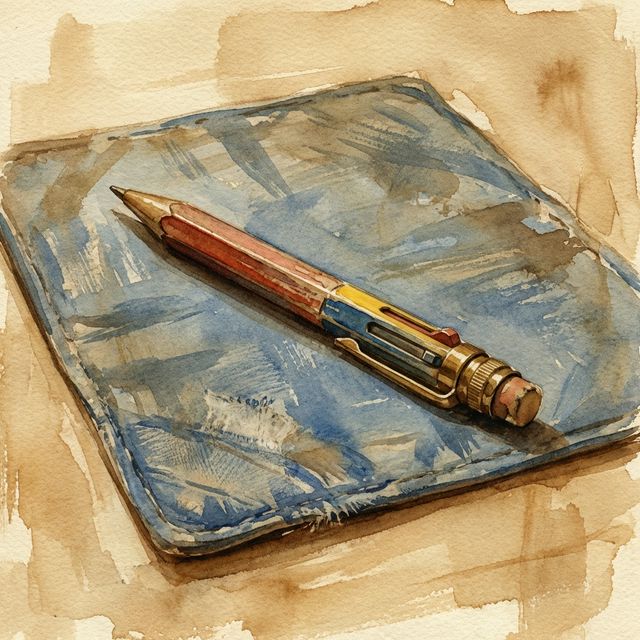
The classroom was full of toys he remembered decades later: "giant blocks, which they somehow notched and grooved so we could link them together," and "lots of clay and crayons, and hours of being read to". His most prized possession was a pencil that "would write in many different colors, depending on how you turned it". Acquiring it was an epic undertaking: "I remember all of the planning and saving and cajoling of my parents that I had to do to get that wonderful pencil".
He also had "one of those little metal boats that putts through the water when one put a lit candle in a little holder in the back of the boat. It was small enough to circle in a washbasin, the space it occupied when I brought it to school".
Dad's earliest memories of his teachers were warm but vague. He couldn't remember his Kindergarten teacher's name or face, but he could "recall as clearly as if it were yesterday her telling us on the first day of school the meaning of the word Kindergarten and about how she was going to water and nourish her tiny garden". He reflected, "I hope that she was, in fact, the sweet woman that I remember".
Cast of Characters
Context for this story
Read more in Chapter 3 →Comments
Loading comments...